Homeostasis isn’t a static “set‑and‑forget” state; recent research and wearable tech are exposing gaps in the old model, prompting a fresh look at how our bodies keep temperature, glucose, and stress levels in check. Get ready to revolutionize your understanding of homeostasis balance by recognizing the hidden trade‑offs, realistic limits, and actionable tweaks that can keep you steadier in a world that’s anything but constant.
Why the Classic View Falls Short
The textbook definition—“the body’s ability to maintain internal stability despite external changes”—still holds, but it masks three practical problems:
- Individual variability: Genetics, age, and lifestyle mean the “ideal” set points differ dramatically from person to person.
- Dynamic stressors: Modern stressors (blue‑light exposure, erratic work hours) fluctuate faster than the body’s traditional feedback loops can compensate.
- Data blind spots: Until recently, we could only measure a handful of markers (heart rate, body temp). Now continuous glucose monitors, HRV sensors, and skin‑conductance patches reveal micro‑shifts that were invisible before.
New Tools, New Perspectives
Wearable ecosystems are the first real game‑changer. A typical setup combines a wrist‑based HRV tracker with a skin‑temperature patch and a discreet continuous glucose monitor (CGM). The data stream lets you see, in near‑real time, how a late‑night Netflix binge nudges your glucose curve, or how a 15‑minute walk stabilizes heart‑rate variability. This granular view reframes homeostasis from a static equilibrium to a “balance dance” where each step can be nudged.
Pros of Real‑Time Monitoring
- Personalized thresholds: Algorithms learn your baseline and flag deviations before they become symptomatic.
- Immediate feedback loops: If your HRV dips after a stressful meeting, a breathing cue appears on your smartwatch, letting you intervene instantly.
- Long‑term trend spotting: Patterns over weeks reveal whether lifestyle tweaks (e.g., swapping coffee for tea) produce measurable stability gains.
Trade‑offs to Consider
- Data overload: Constant numbers can create anxiety if you’re not equipped to interpret them.
- Battery life & wearability: High‑resolution sensors demand frequent charging, and skin‑adhesive patches may irritate sensitive users.
- Privacy concerns: Continuous health streams are attractive targets for data brokers; choosing reputable platforms is essential.
Practical Steps to Strengthen Your Homeostatic Resilience
Even without a full sensor suite, you can adopt evidence‑backed habits that reinforce the body’s natural feedback mechanisms.
1. Structure Light Exposure
Morning sunlight triggers cortisol peaks and aligns circadian rhythms, while dim lighting after sunset supports melatonin release. Aim for 20–30 minutes of natural light within the first hour after waking, then limit screens to under 30 minutes before bed.
2. Stabilize Glycemic Input
Pair carbohydrates with protein or healthy fats to blunt post‑meal glucose spikes. A simple rule: for every 15 g of carbs, include at least 5 g of protein. This slows absorption and gives insulin a gentler workload.
3. Prioritize Micro‑Recovery
Short, intentional breaks—five minutes of deep breathing or a quick walk—reset HRV and lower sympathetic tone. Set a timer to stand, stretch, and inhale through the nose for four counts, exhale for six, repeating three cycles.
4. Hydration with Electrolytes
Plain water is essential, but after intense sweat loss, replace sodium, potassium, and magnesium to avoid osmotic stress that can derail cellular balance. A pinch of sea salt and a splash of orange juice in your water bottle restores a basic electrolyte mix.
What to Expect: A Balanced Outlook
Reframing homeostasis as a dynamic equilibrium means accepting occasional “off‑balance” moments. With the right tools, you’ll spot these dips early, intervene, and reduce the cumulative wear on your systems. However, expect diminishing returns: after the first few lifestyle adjustments, further gains become marginal, and the body’s innate limits reassert themselves.
In short, the revolution isn’t about a miracle cure but about a smarter, data‑informed dialogue with your physiology. By acknowledging the pros, navigating the trade‑offs, and setting realistic expectations, you can keep your internal orchestra playing in tune—even when the world outside is constantly changing.
Diagram For Serpentine Belt

Diagram For Serpentine Belt
2015 Chrysler 200 Serpentine Belt Replacement Guide – Moo Wiring

2015 Chrysler 200 Serpentine Belt Replacement Guide – Moo Wiring
Diagram For Serpentine Belt - De Haus Blog

Diagram For Serpentine Belt - De Haus Blog
Serpentine Belt Routing Diagram

Serpentine Belt Routing Diagram
Types Of Serpentine Belts At Ike Fordyce Blog
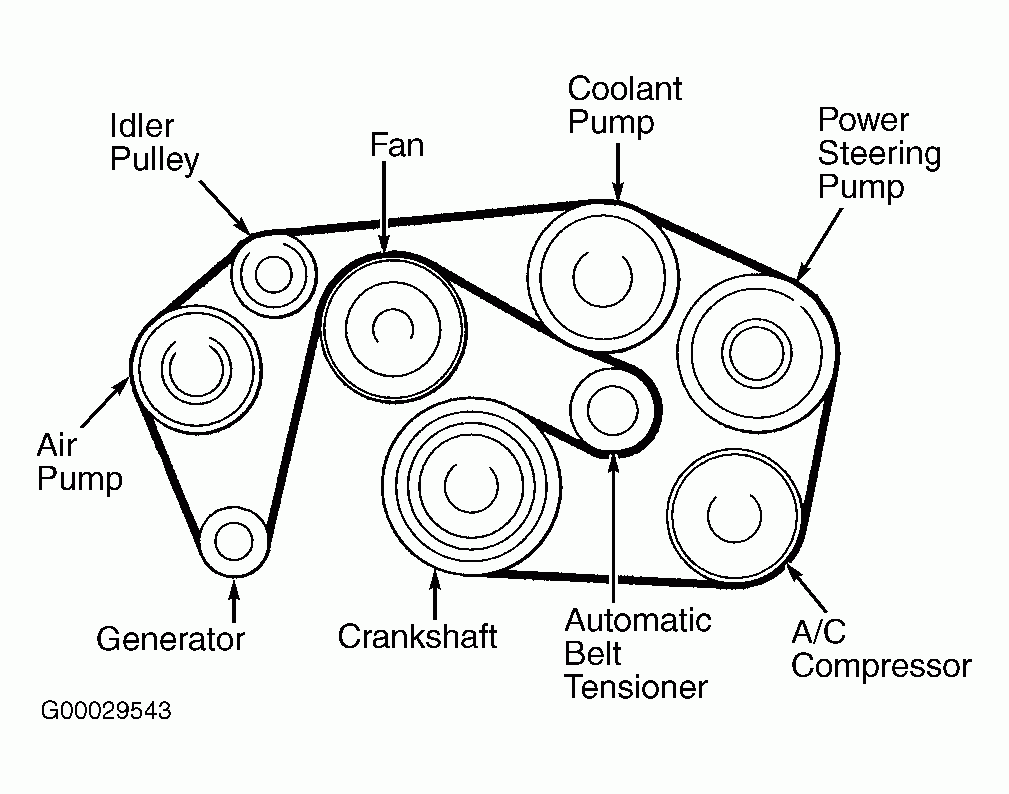
Types Of Serpentine Belts at Ike Fordyce blog