School districts across the United States are revisiting the core tools that support early math fluency, and the multiplication table remains the most reliable anchor. Recent curriculum reviews highlight that a well‑designed, accessible table can cut practice time by up to 30 % while boosting confidence among third‑grade learners. Educators seeking a pragmatic, research‑backed approach now have a clear roadmap for selecting, displaying, and reinforcing the essential multiplication chart in every classroom.
Why a Master Multiplication Table Matters
Beyond being a simple reference, the multiplication table serves as a visual scaffold that helps students internalize patterns such as commutativity (e.g., 3 × 5 = 5 × 3) and the relationship between factors and products. Studies from the National Council of Teachers of Mathematics show that students who can quickly locate facts on a standard 0‑12 grid achieve higher scores on timed assessments. The table also reduces cognitive load, freeing mental resources for problem‑solving rather than rote recall.
Choosing the Right Format for Your Students
Physical posters, laminated cards, and interactive digital boards each have distinct benefits. A 24 × 36‑inch poster printed on matte finish minimizes glare and is easy to reference from any desk. Laminated cards allow small‑group rotation, giving each pair a portable reference during center activities. For tech‑rich classrooms, a responsive web widget can adapt to tablet screens, offering hover‑over highlights for multiples of a chosen number. Selecting a mix of analog and digital formats ensures that visual, tactile, and kinesthetic learners all have a comfortable entry point.
Integrating the Table into Daily Routines
Consistency turns a simple chart into a habit. Consider these quick‑start steps:
- Morning Warm‑Up: Project the table on the whiteboard for a five‑minute “Fact Flash” where students call out products in a chosen row or column.
- Center Rotation: Pair the laminated cards with manipulatives (e.g., arrays of counters) so learners can physically build the product they locate.
- Exit Ticket: End each math block with a one‑question problem that requires the student to reference the table, reinforcing retrieval.
Embedding these moments into the schedule creates multiple, low‑stakes opportunities for reinforcement without extending class time.
Adapting for Diverse Learners
Students with visual impairments benefit from high‑contrast, large‑print tables that use bold sans‑serif fonts. For English language learners, pairing each product with a simple sentence—“4 × 6 equals 24”—provides linguistic context. Gifted students can explore extensions such as the 0‑15 grid or the “inverse table” that lists division facts derived from the multiplication chart. Differentiated worksheets that ask learners to fill in missing entries also support mastery across ability levels.
Measuring Impact and Scaling Up
Track progress with quick diagnostic quizzes administered before and after a six‑week implementation cycle. Compare the average number of correctly answered timed facts; an improvement of five or more items per student typically signals that the table is being internalized. Share the data at faculty meetings to justify expanding the practice to other grade levels or to allocate budget for larger, classroom‑wide posters. When the evidence aligns with improved assessment scores, the multiplication table becomes a low‑cost, high‑return investment for the whole school.
Concrete Next Steps for Administrators
- Audit existing classroom walls for visible, up‑to‑date tables; replace faded charts within the next fiscal quarter.
- Allocate a modest budget (≈ $25 per classroom) for laminated cards and a single large poster per room.
- Schedule a professional‑development session that models the “Morning Warm‑Up” routine and provides printable quick‑start guides.
- Set a district‑wide benchmark—e.g., 80 % of third‑graders achieving 90 % accuracy on timed fact tests by the end of the school year.
By treating the multiplication table as an essential, dynamic classroom asset rather than a static decoration, schools can streamline fact fluency, support varied learning needs, and lay a stronger mathematical foundation for every student.
Elemence Limestone Grey Stone Effect Shower Panel – Naturewall

Elemence Limestone Grey Stone Effect Shower Panel – Naturewall
Light Grey Marble Gloss 1m Shower Panel

Light Grey Marble Gloss 1m Shower Panel
Bathroom Wall Panels Light Grey

Bathroom Wall Panels Light Grey
Upgrade Your Bathroom With Shower Wall Panels: - Decoholic
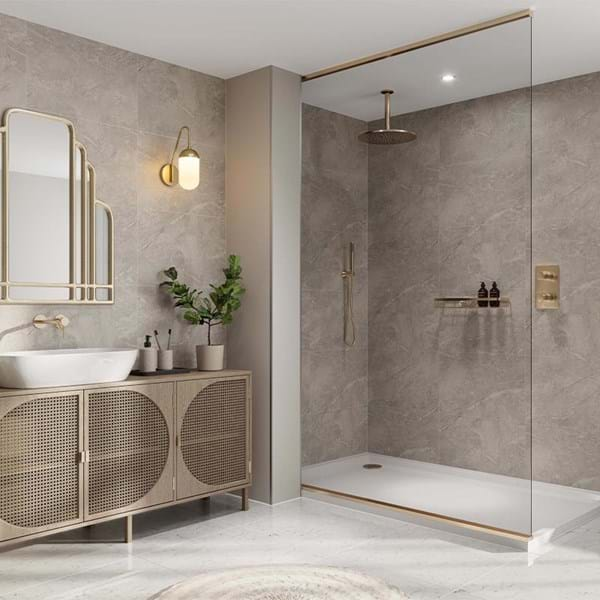
Upgrade Your Bathroom with Shower Wall Panels: - Decoholic
Sivara Natural Stone Marble Effect PVC Shower Panel | Naturewall

Sivara Natural Stone Marble Effect PVC Shower Panel | Naturewall